3D Molded PVC Patch vs UV Printing
Last updated: 2026-10-15
A 3D molded PVC patch is vulcanised into a raised, sculpted emblem with dimensional edges, and needs a mould. UV digital printing lays full-colour ink flat on the strap, allows gradients and photographic detail, and needs no mould. Choose relief for a fixed crest; choose printing when artwork changes or varies per pair.
What does each method actually produce?
The two are different manufacturing processes, not two quality tiers, and they fail in different ways. Picking wrongly usually shows up as either a logo that has lost its detail or a setup cost that cannot be amortised.
| 3D molded PVC patch | UV digital printing | |
|---|---|---|
| Result | Raised, sculpted emblem with dimensional edges | Flat full-colour print on the strap surface |
| Relief | Yes — three-dimensional | No — sits on the surface |
| Detail limits | Fine detail below the mould threshold must be simplified | Gradients and photographic detail are reproducible |
| Setup | A mould is required | No mould; a print job |
| Per-pair variation | Not practical — one mould, one design | Straightforward, e.g. a different name on each pair |
| Suits | Solid crests, mascots, bold shapes, team badges | Multi-colour logos, gradient artwork, low-setup runs |
When is a raised patch the better choice?
When the mark is a settled shape that will be reordered. A crest, a mascot or a bold geometric badge reads more strongly raised than printed, and once the mould exists it is the cheaper option to repeat. This is the reason team and club programmes usually put the shared crest on a PVC patch.
The discipline is artwork simplification. A mould has a detail threshold: hairline strokes and gradients below it will not reproduce, so a logo with fine text usually needs a simplified version approving before tooling is cut.
When is UV printing the better choice?
When the artwork carries colour that a mould cannot hold, or when the mark changes between units. UV digital printing reproduces gradients and photographic detail, and because there is no mould, changing the design between orders costs nothing in tooling.
It is also the method that makes per-pair variation practical. A squad of 24 with 24 different names is a print job, not 24 moulds.
Can both be used on the same slide?
Yes, and it is the configuration we recommend most often for teams: a 3D molded PVC patch for the shared club crest on the strap, plus UV digital printing for the individual names and numbers. The same slide then carries both a raised brand mark and per-unit identification without duplicating tooling.
Which method should a first order use?
If the logo is final and will repeat, a PVC patch. If the artwork is still moving, or the design will differ between orders, UV printing avoids paying for a mould you will outgrow. If you are unsure, send the artwork and quantity and we will price both methods so the comparison is on numbers rather than principle — a 3D virtual proof is returned within 24 hours.
Frequently asked questions
Which method looks more premium?
A 3D molded PVC patch, because it is raised and sculpted. That is a presentation advantage, not a durability one — neither method is inherently longer lasting.
Can UV printing reproduce my logo exactly as designed?
UV digital printing handles gradients and photographic detail that a mould cannot. If your logo relies on fine detail, printing reproduces it more faithfully.
Can I print a different name on every pair?
Yes. Per-pair variation is a print job with no new mould, which is why team orders pair UV-printed names with a single molded crest.
Does a PVC patch need simplified artwork?
Usually yes. A mould has a detail threshold, so hairline strokes and gradients below it are simplified before tooling is cut.
Related in this guide
Featured Production Models
View All 6 Footwear Silhouettes →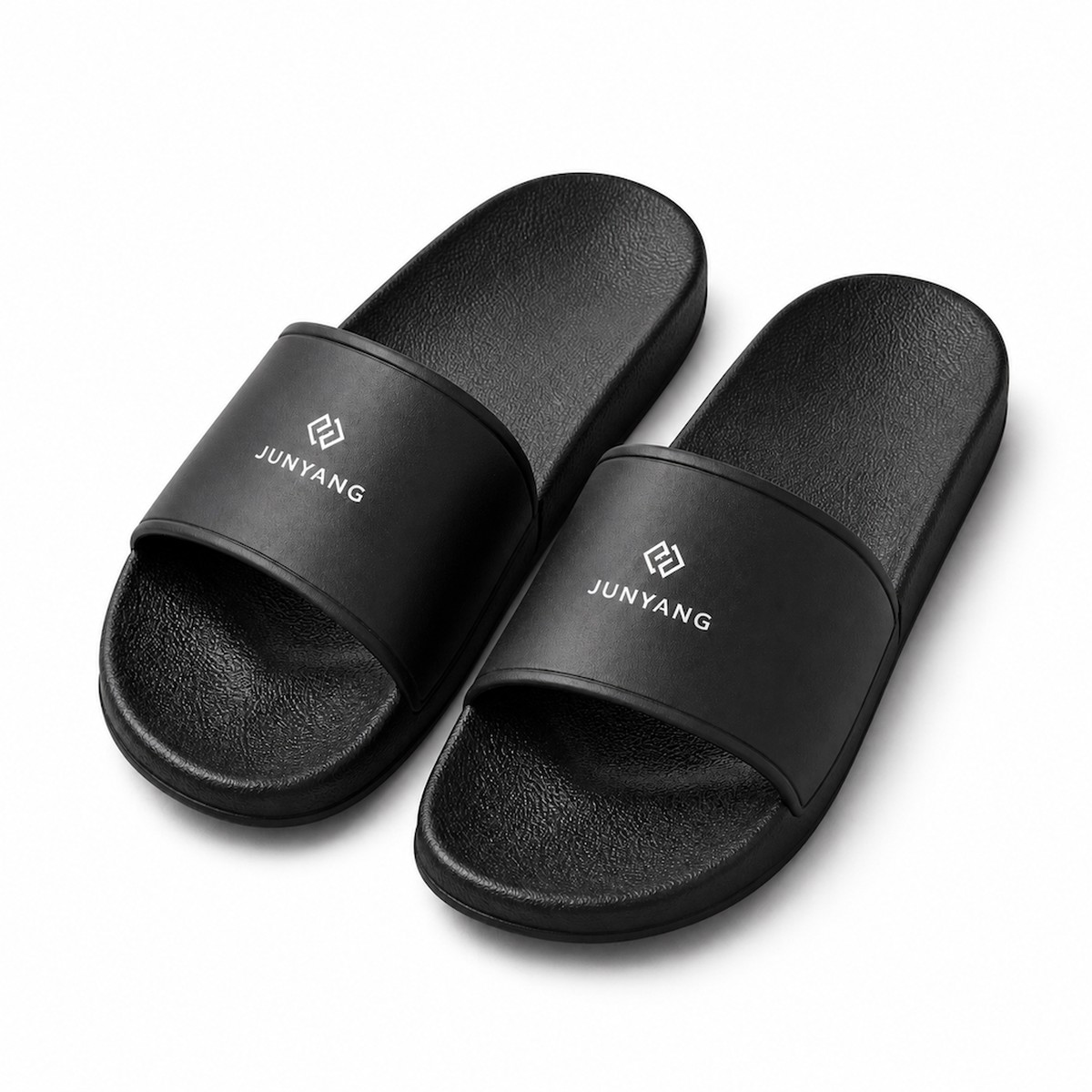
Pro Athletic Slide (Model 229)
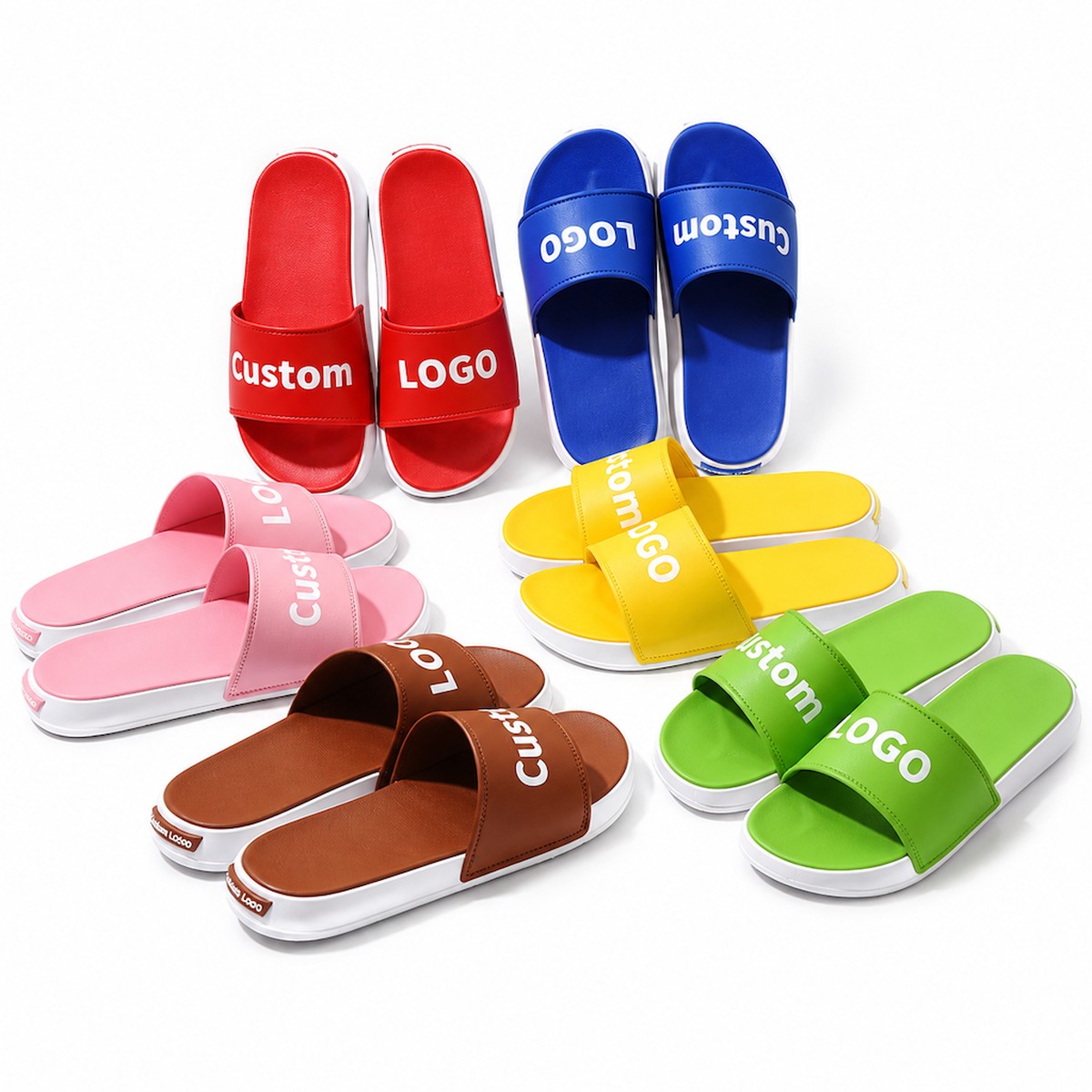
Dual-Tone Athletic Slide (Model 219)
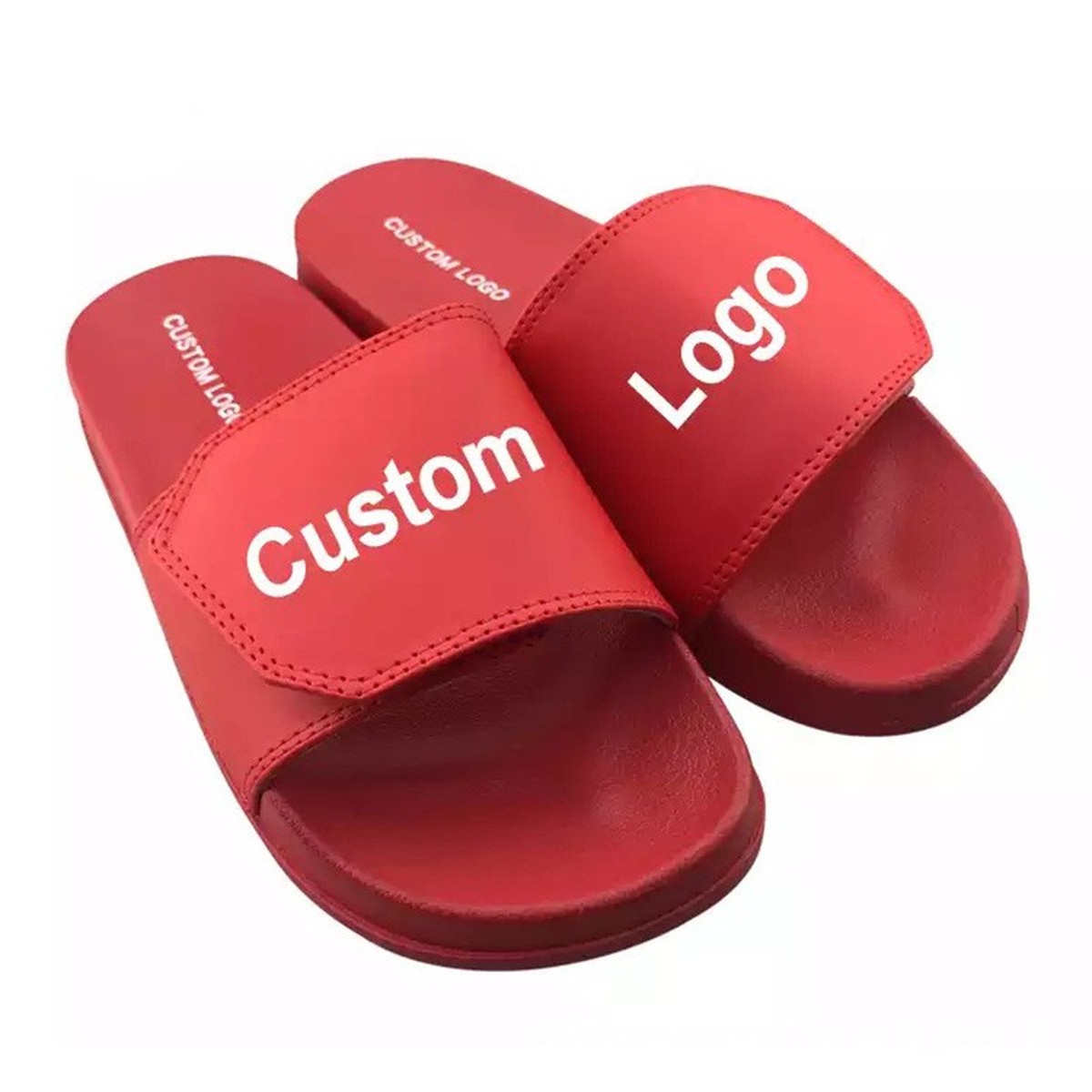
Comfort Band Leisure Slide (Series 5)
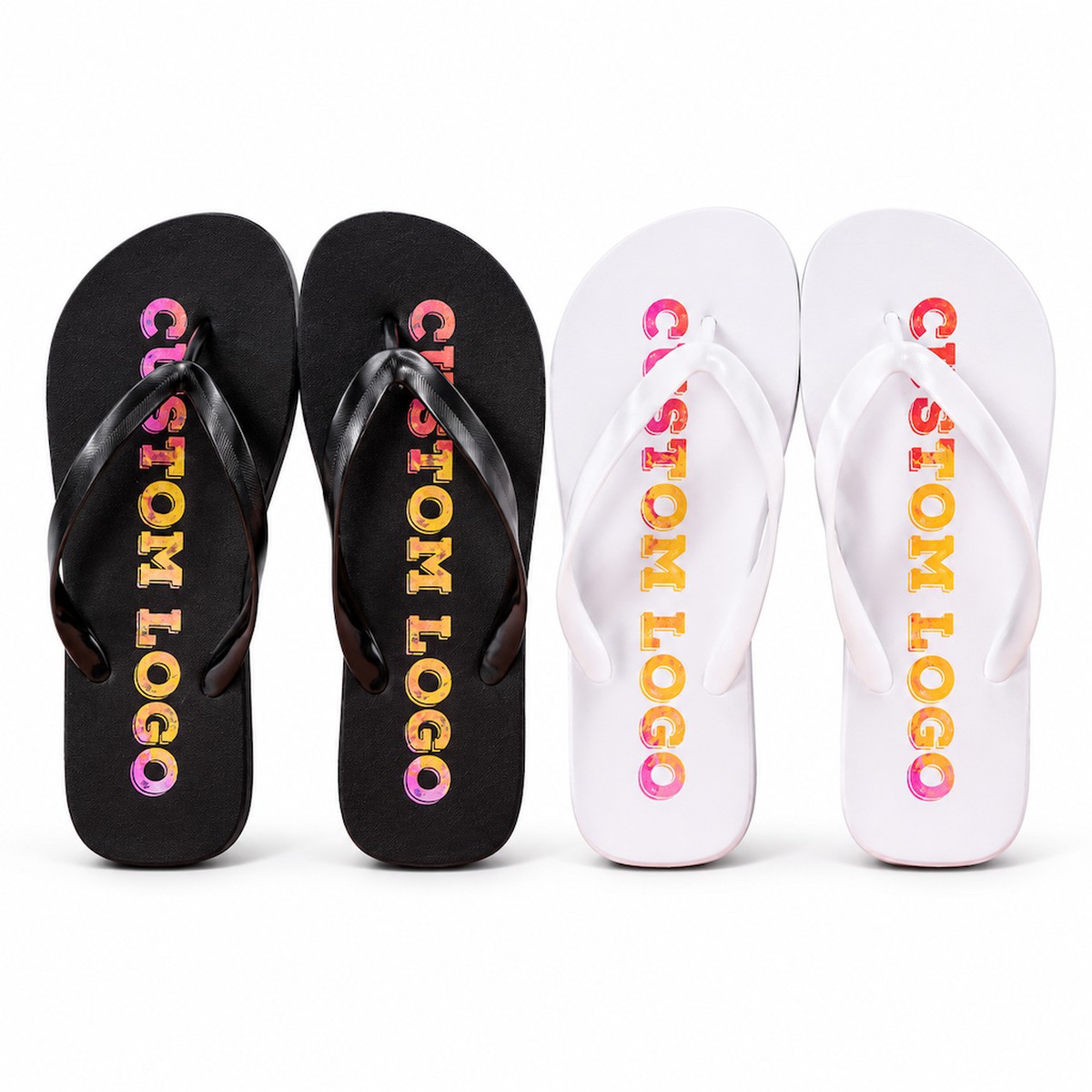
Beach Pro Flip Flop (Series 3)
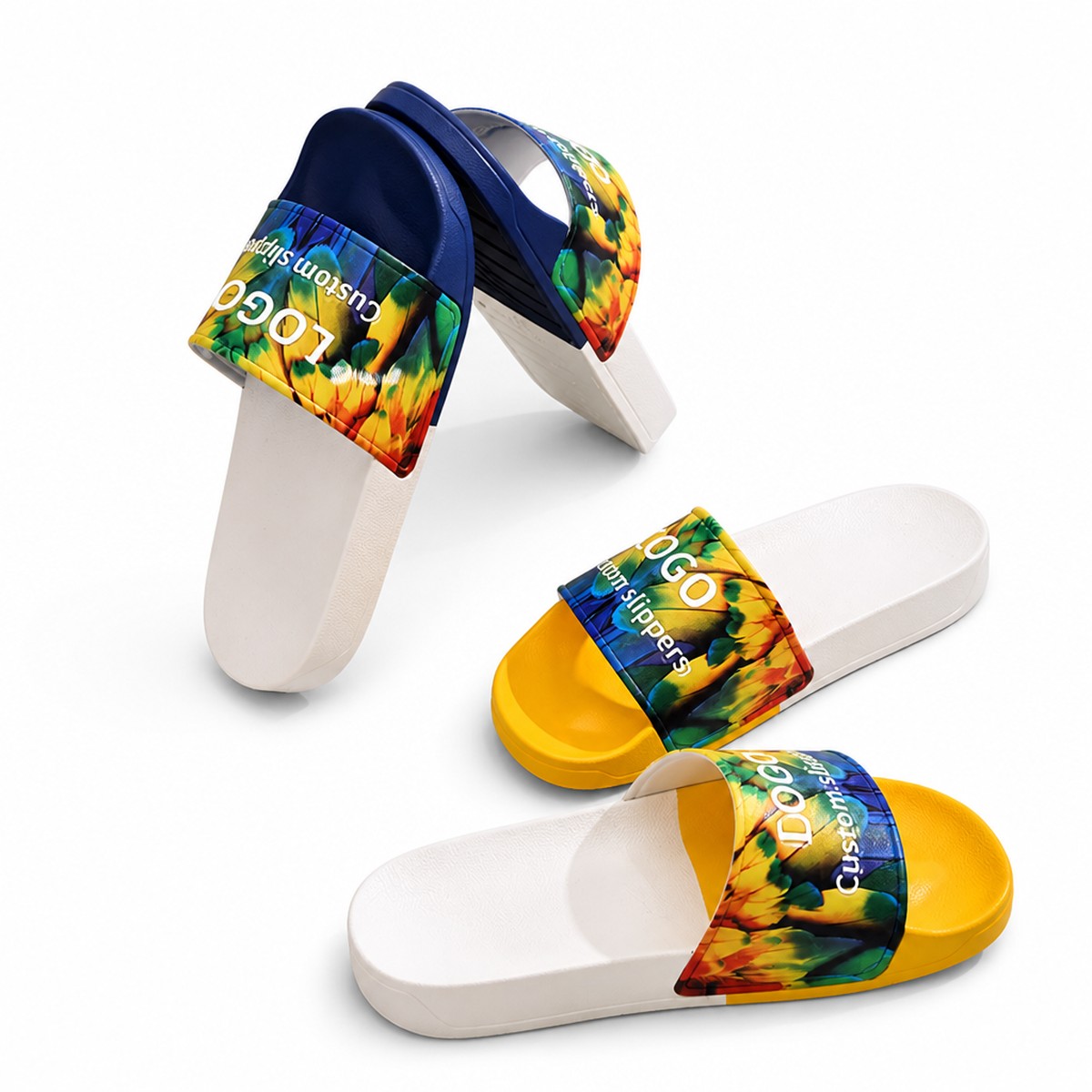
Classic Club Slide (Series 8)
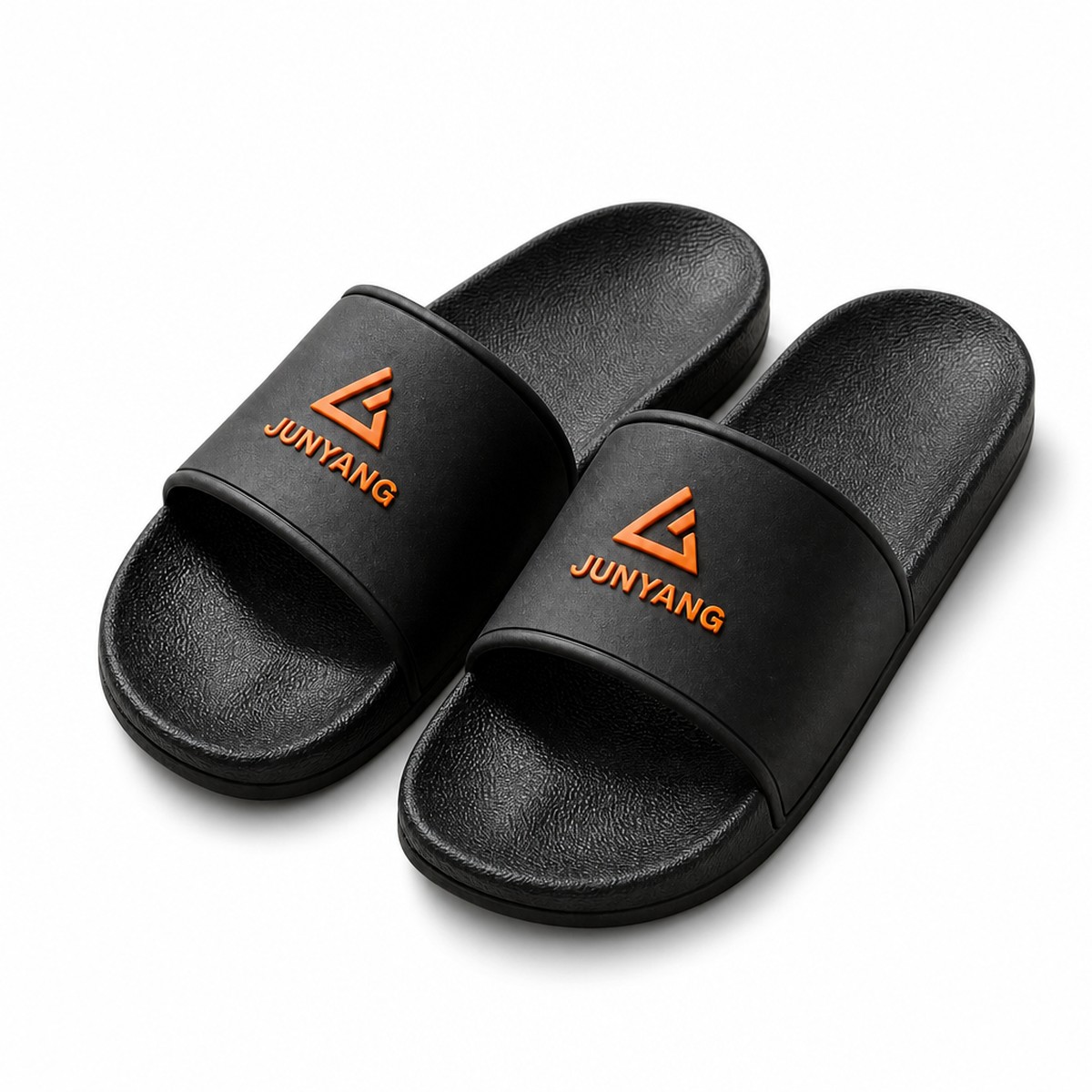
Engineered Molded Slide (Model 229-R)
Get your 3D proof and bulk quotation
Send your artwork, construction and quantity. Our footwear engineering desk replies with an itemised quotation and a 3D virtual proof within 24 hours. Strict 100-pair MOQ.