How to Verify a China Slide Sandal Factory
Last updated: 2026-10-15
Verify five things, in this order: who holds the audit certificate, whether branding is done in-house or subcontracted, who controls your artwork files, who owns the mould, and where the inspection points sit. A factory that answers all five specifically is a different risk profile from one that answers with a brochure.
Why does in-house branding matter more than the machine list?
Most slide factories can show you a press. Fewer can tell you whether the branding on your order will run on their own line or be sent out to a third party. That single answer determines how many hands touch your artwork, how many points of failure exist, and whether the audit trail is continuous.
We run multi-head automated UV printers, hydraulic PVC patch vulcanising presses and computer-guided laser debossing lines inside our own clean workshop. Put that question to any supplier you are evaluating and ask for the production floor, not the showroom.
What should the audit certificates actually cover?
Ask which legal entity holds the certificate, which site it names, and what scope it covers. A certificate held by a trading company that does not operate the line tells you nothing about the line.
- TÜV Rheinland audited laboratory — request the report and check the named site
- ISO 9001:2015 — confirm the scope covers footwear production, not only trading
- CA Prop 65 and REACH compliance for the EVA and strap compounds actually specified on your order
Who owns the mould, and what happens to it afterwards?
If a bespoke tooling is built for your design, settle ownership in writing before the order. The related commercial question is what happens to that tooling after the run: is it retained, and is a maintenance fee charged later? We publish that there are no hidden mould maintenance fees.
If a supplier cannot say who owns the mould in one sentence, treat that as the answer.
How should artwork and proofing be controlled?
The safest workflow is one where nothing is cut or moulded until you have approved a proof. We verify supplied vector artwork (.AI, .EPS or .PDF) within 24 hours and return a 3D virtual proof showing placement, scale and colour on the actual model, so approval happens before tooling commitment rather than after.
Ask any factory what their proof looks like and what the approval step blocks. A verbal confirmation is not a control.
Where should inspection points sit in the process?
Inspection should be placed at the transitions, not only at the end: after patch vulcanising or printing, after strap assembly, after footbed finishing and at final packing. A single end-of-line check finds defects when the whole batch is already built.
Our stated throughput is 50,000+ pairs per month across automated assembly lines, and the higher volume tiers include a dedicated QC inspector. Ask what yours includes.
What should I ask for before paying a deposit?
Ask for the artwork verification result, the 3D proof, a written size breakdown, the packing format and the freight mode — all five before tooling starts. Then ask for the same five on the quote so nothing is agreed verbally.
Send us your specification and we will return an itemised quotation within 24 hours, with the proof sheet alongside it.
Frequently asked questions
Do you subcontract the branding?
No. UV printing, PVC patch vulcanising and laser debossing all run in our own clean workshop, which keeps the audit trail continuous.
Can I see the audit report before ordering?
The laboratory is TÜV Rheinland audited and the quality system is ISO 9001:2015. Ask our engineering desk for the current report and we will send the document that names the site.
Are there hidden mould maintenance fees later?
No — we publish that no hidden mould maintenance fees apply.
What stops the wrong logo from going into production?
Nothing is cut or moulded until you approve the 3D virtual proof, which we return within 24 hours of receiving vector artwork.
Related in this guide
Featured Production Models
View All 6 Footwear Silhouettes →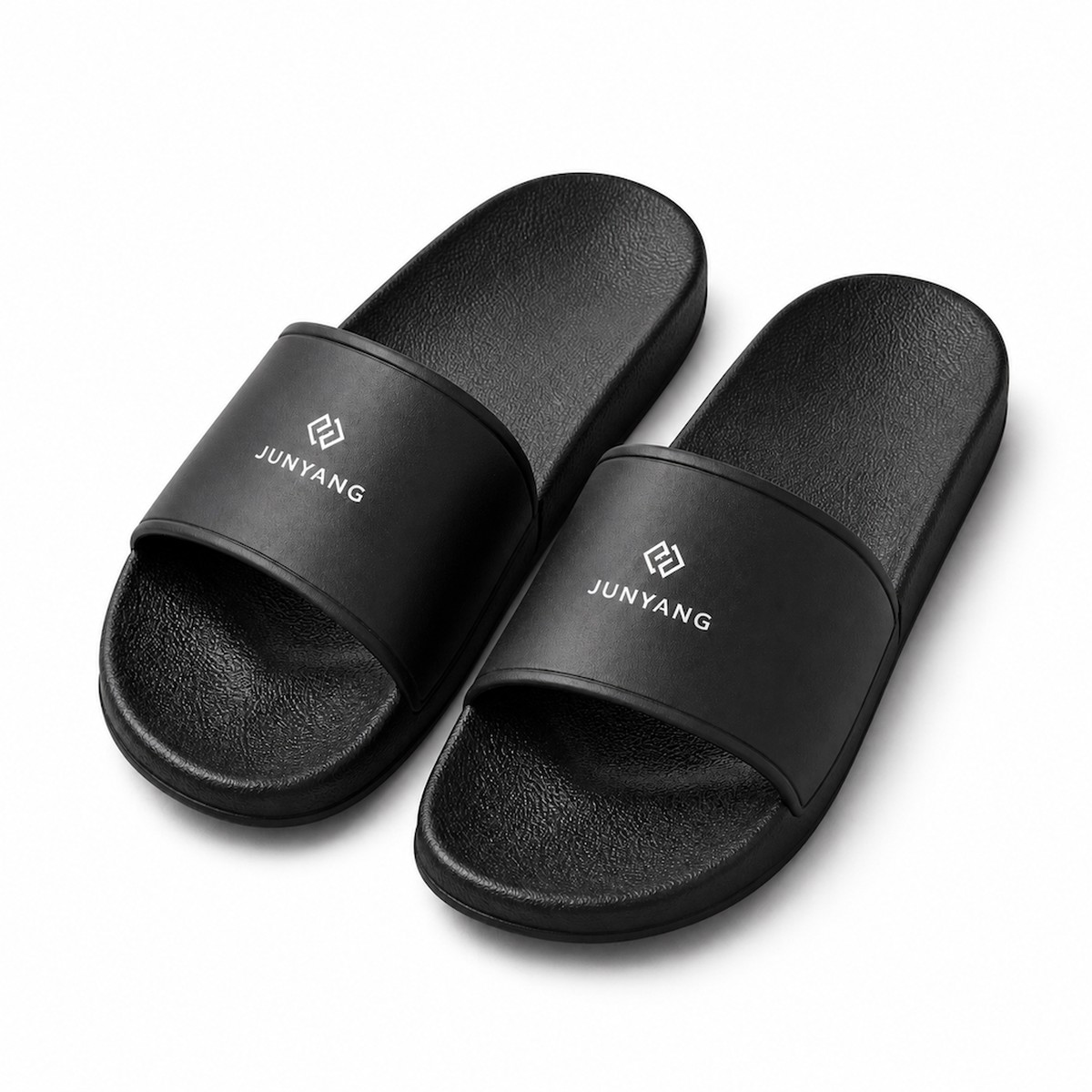
Pro Athletic Slide (Model 229)
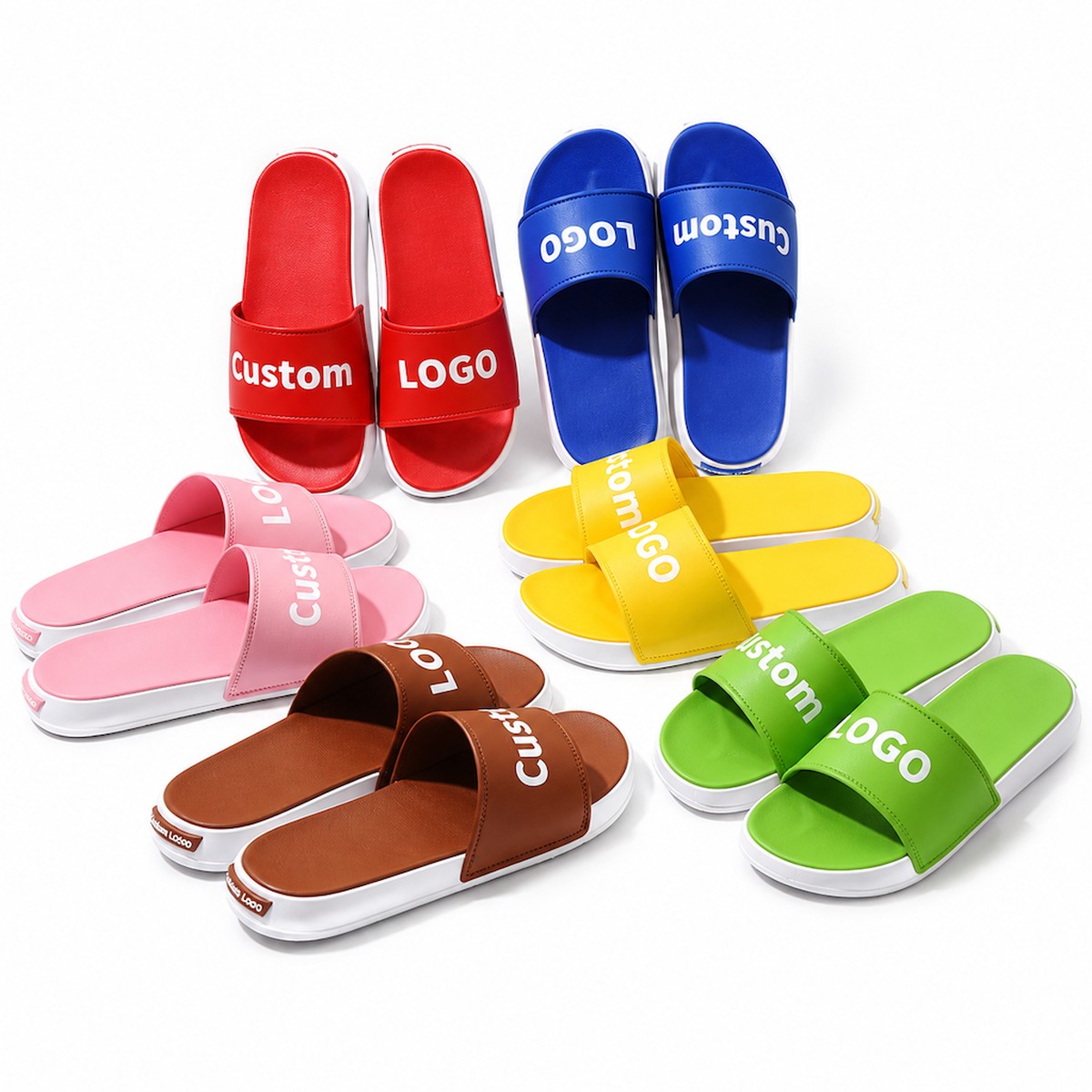
Dual-Tone Athletic Slide (Model 219)
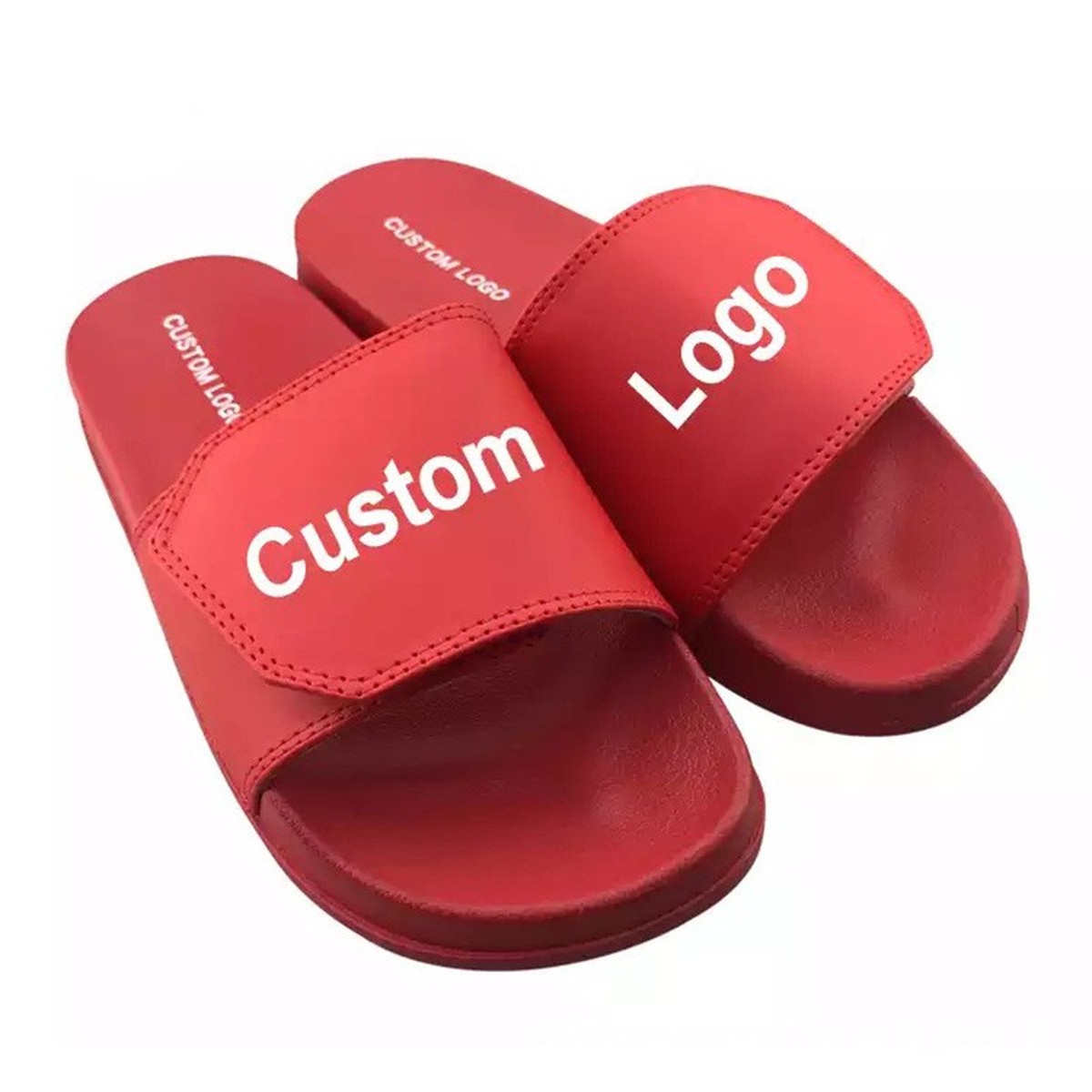
Comfort Band Leisure Slide (Series 5)
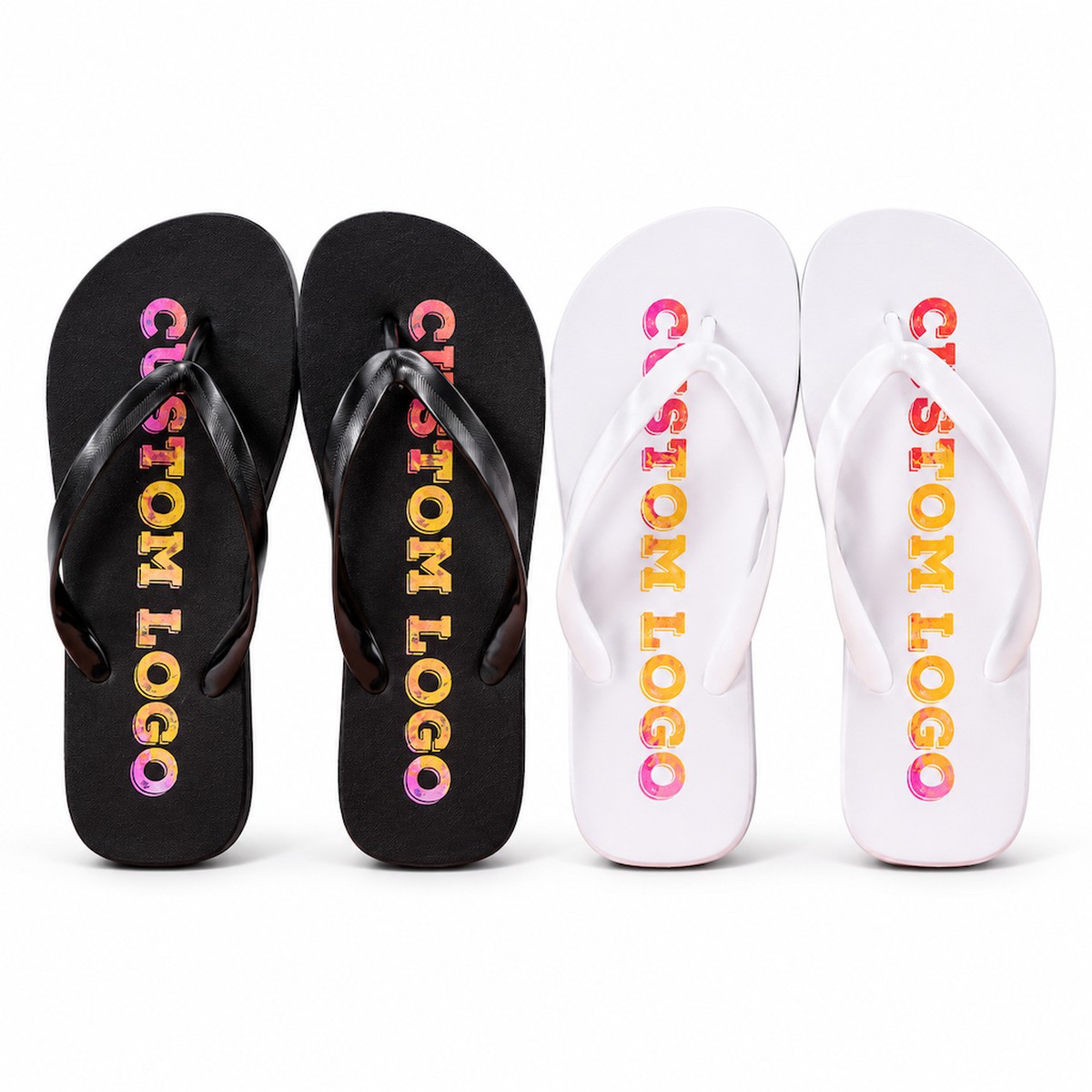
Beach Pro Flip Flop (Series 3)
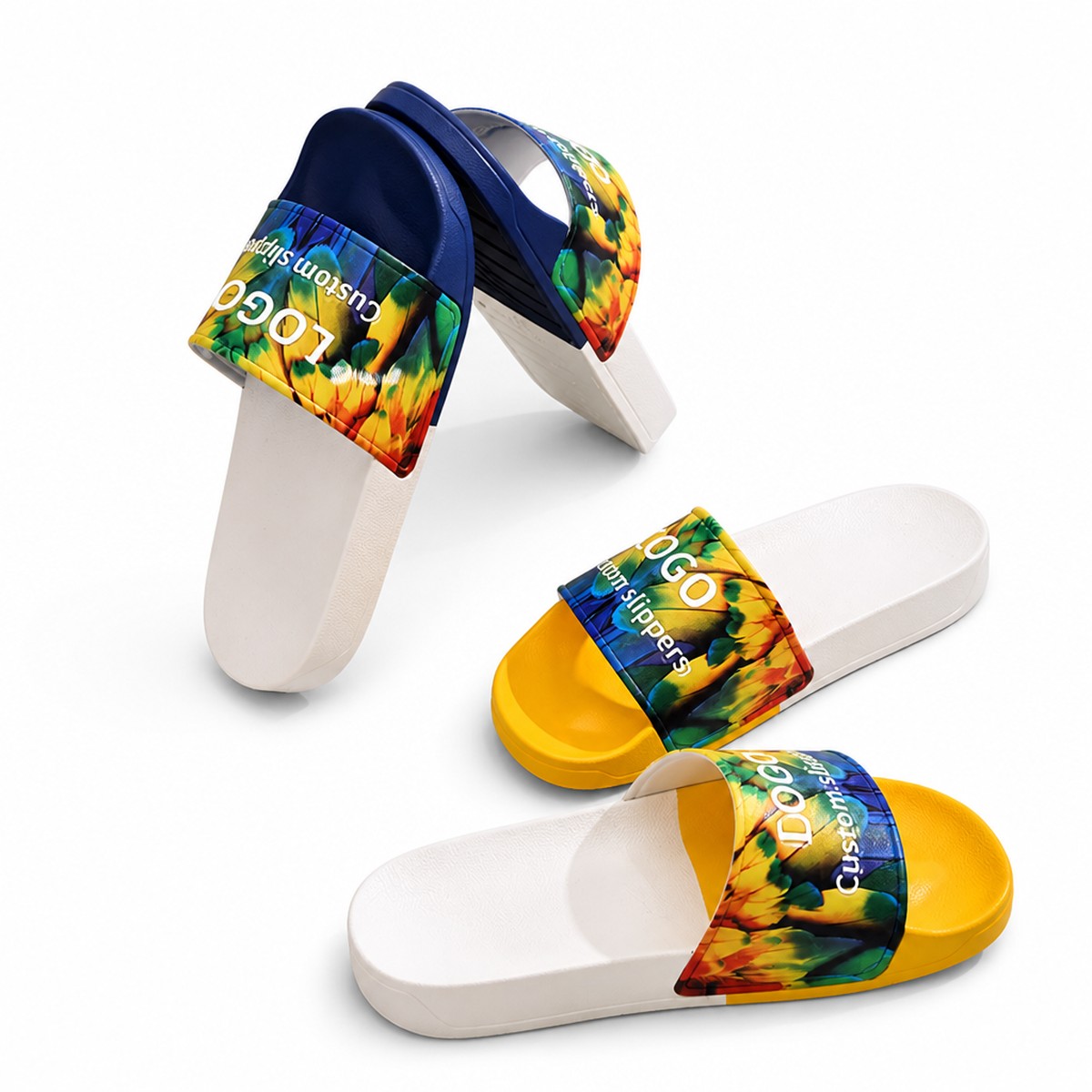
Classic Club Slide (Series 8)
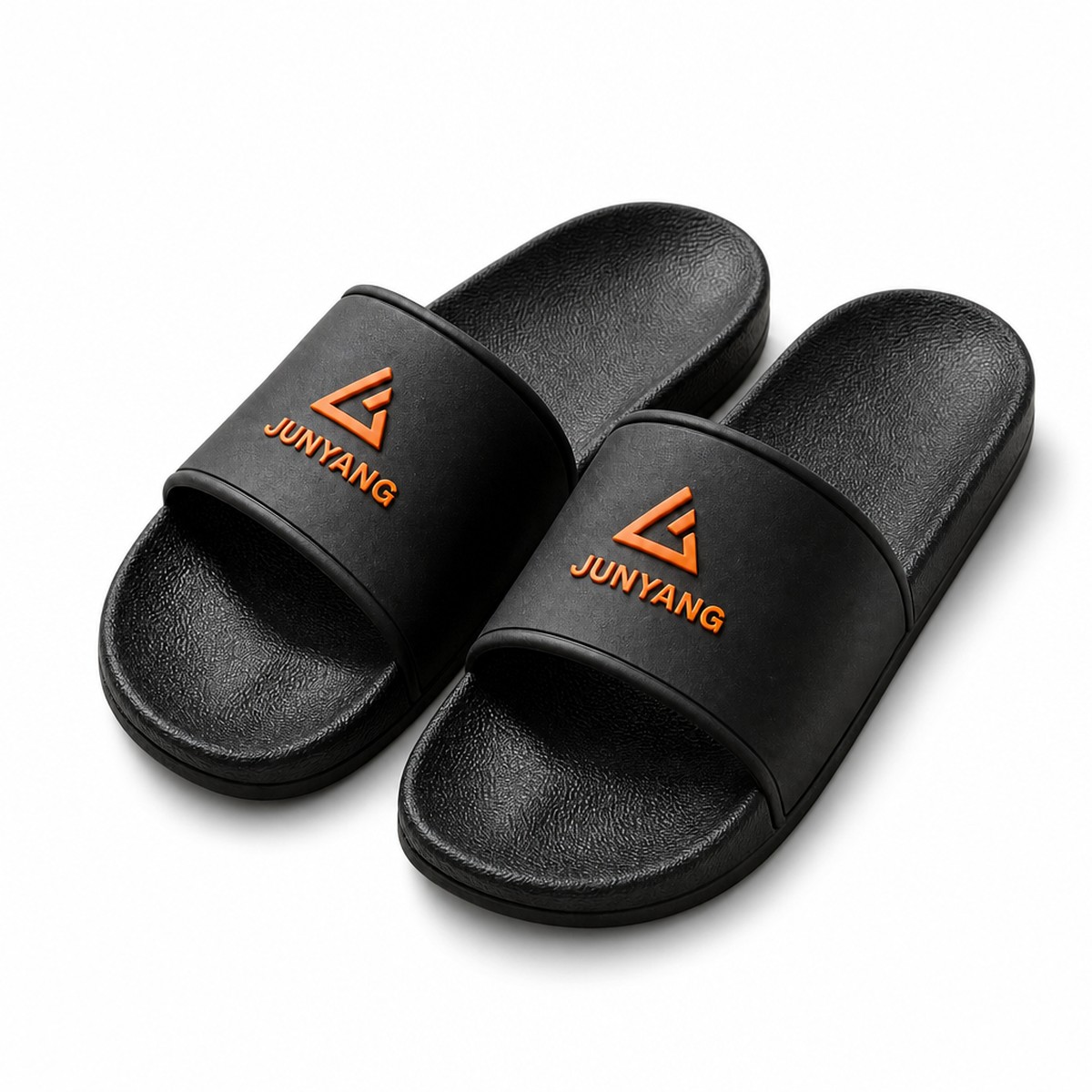
Engineered Molded Slide (Model 229-R)
Get your 3D proof and bulk quotation
Send your artwork, construction and quantity. Our footwear engineering desk replies with an itemised quotation and a 3D virtual proof within 24 hours. Strict 100-pair MOQ.