EVA vs PU vs PVC Slide Materials Compared
Last updated: 2026-10-15
EVA is the moulded foam used for slide soles — we inject it single or dual density, and it is the lightest option. PU is normally the strap compound rather than the sole. PVC appears as the 3D molded patch that carries your logo, not as the sole. Choosing between them is mostly about cushioning, weight and which branding method you need.
What is each material actually used for on a slide?
The three materials are often compared as if they compete for the same part of the shoe. In a production context they occupy different positions, and that misunderstanding is a common source of badly specified bulk orders.
| Material | Where it sits on the slide | Role |
|---|---|---|
| EVA | The sole and midsole | Moulded cushioning foam; injected single or dual density |
| PU | The strap or upper band | Structural upper that holds tension and takes the branding surface |
| PVC | A molded patch applied to the strap | Carries a raised 3D logo or crest |
EVA: why it dominates slide soles
EVA is injected into a mould, which is what allows the anatomical contours — arch support, heel cup, toe bar — that a cut-and-glued sole cannot produce. We run single-density and dual-density EVA, plus a high-rebound cloud EVA on the comfort construction and a 15–18mm dual-density EVA on the beach flip flop construction.
The practical advantages are low weight, good cushioning and compatibility with our CA Prop 65 and REACH compliant eco-EVA material specification. The trade-off is that EVA is a moulded part: changing the geometry means changing the tooling, so EVA rewards a settled design rather than constant revision.
- Lightest of the three — it is also why our frosted zip-lock packing cuts air-freight volumetric weight
- Supports anatomical contouring: arch, heel cup, toe bar
- Available as single density, dual density, and high-rebound cloud EVA
- Tooling-dependent, so design changes carry a mould cost
PU: the strap, not the sole
PU is what we use for strap constructions such as the padded high-tear PU strap and the seamless ergonomic PU band. Its job is structural: it holds tension across the foot and presents a stable surface for branding.
We also run a high-elasticity PU foam band on the volume club construction, where a softer band keeps the strap comfortable while still printing cleanly at speed.
PVC: the 3D logo patch
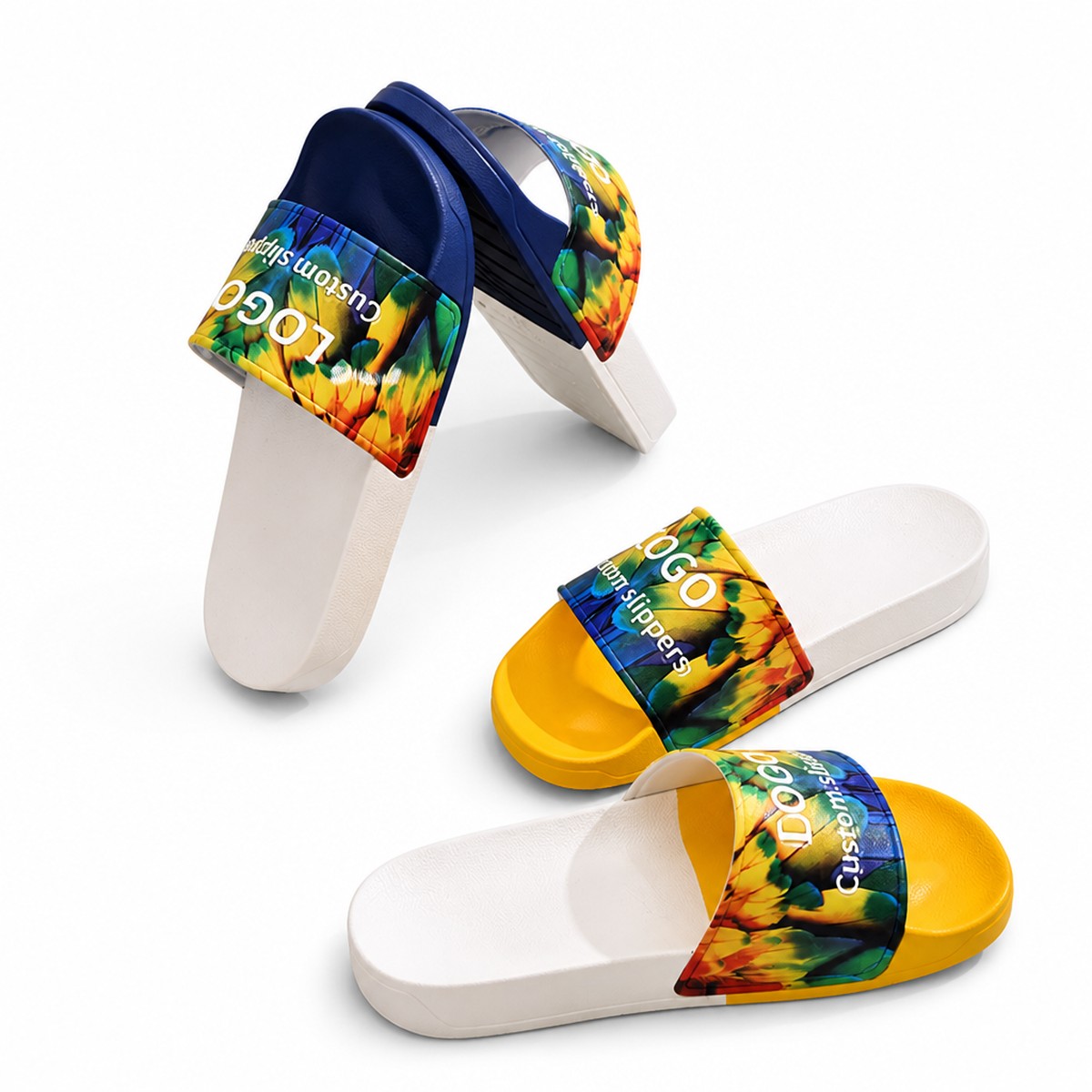
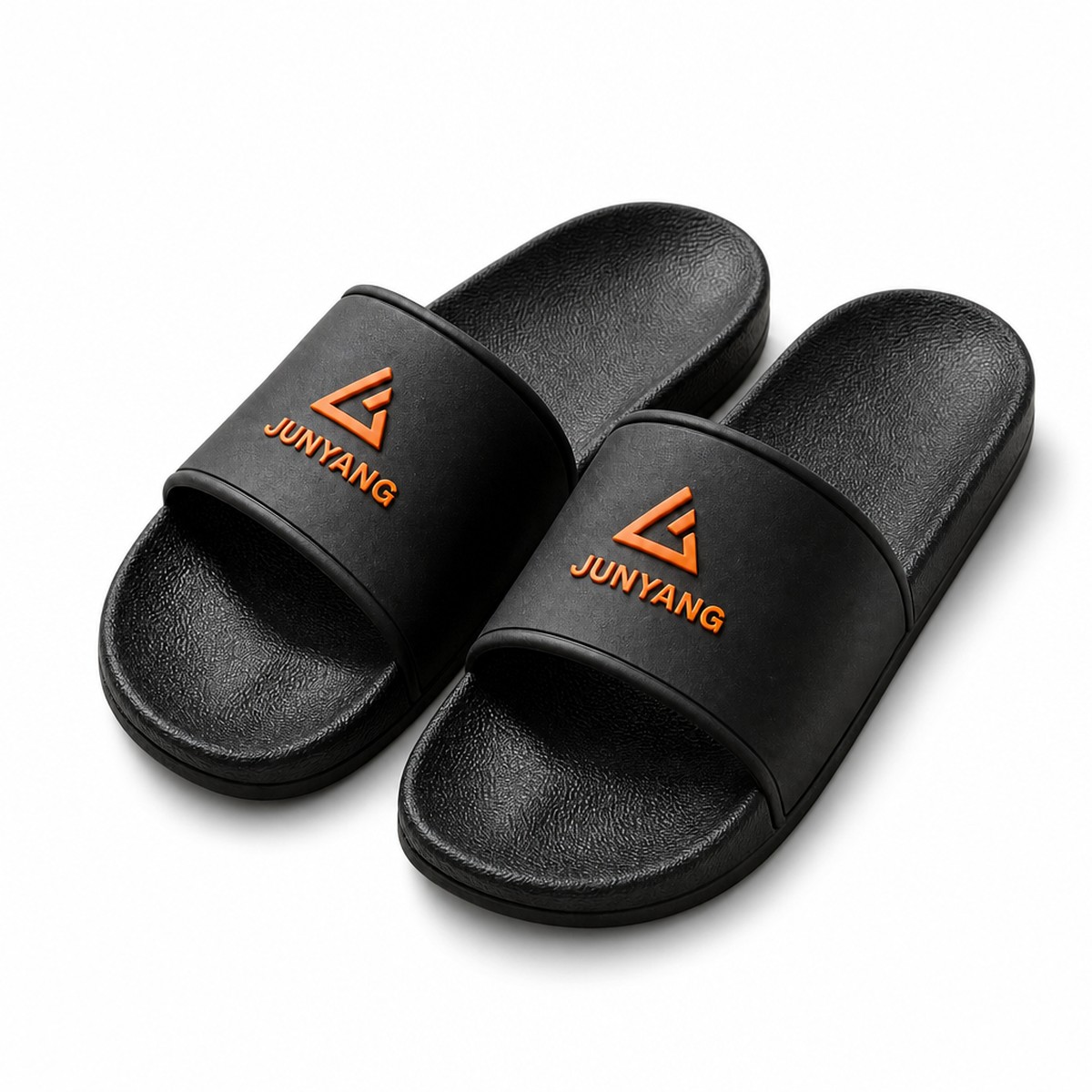
PVC is the material of the 3D molded patch — the raised, sculpted emblem moulded and vulcanised onto the strap. It is the only one of the three that is chosen primarily for what it does to the logo rather than to the footwear structure.
A PVC patch needs a mould, so it suits a logo you intend to run repeatedly. If the artwork changes every order, UV digital printing is the better pairing for the same strap.
How does the material choice change the bulk cost?
Three variables dominate: whether a new mould is involved, how many densities the sole uses, and which branding method the strap carries. Dual-density EVA and a 3D PVC patch both imply moulds; UV printing does not.
Rather than publish a single figure that would be wrong for most specifications, we quote per project: send the construction you want with the quantity and size breakdown, and we return an itemised quotation within 24 hours. Custom strap colours and assorted sizes are included, with no hidden mould maintenance fees.
Which combination should a first bulk order use?
If the priority is a bold, repeatable logo and a settled design, pair a dual-density EVA sole with a padded PU strap and a 3D molded PVC patch. If the artwork is likely to change between orders, or you need per-pair variation such as names, keep the same sole and strap but brand with UV digital print instead.
Frequently asked questions
Is EVA better than PVC for slide soles?
PVC is not used for our slide soles. Soles are injection molded EVA; PVC appears as the 3D molded logo patch on the strap. The two are not substitutes for each other.
What does dual-density EVA add over single density?
A second density lets the sole combine a firmer base with a softer top layer, which is why we use it on the flagship athletic construction and on the ergonomic sole families.
Can I mix a PVC patch and UV print on one slide?
Yes, and it is a common configuration for teams: a PVC patch for the shared club crest plus UV printing for per-pair names and numbers.
Are the materials compliant for the US and EU?
The eco-EVA material specification covers CA Prop 65 and REACH. The laboratory is TÜV Rheinland audited and the quality system is ISO 9001:2015.
Related in this guide
Featured Production Models
View All 6 Footwear Silhouettes →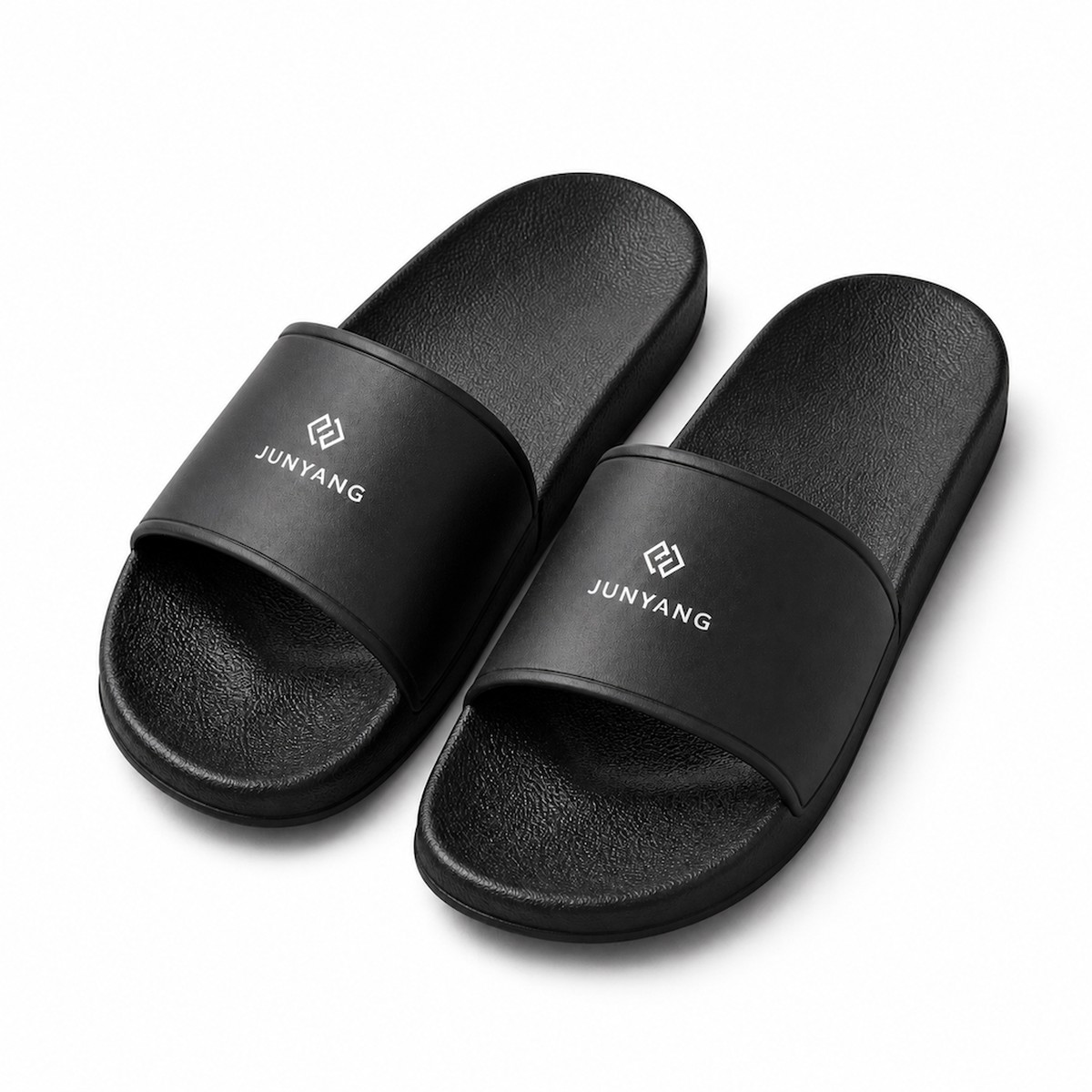
Pro Athletic Slide (Model 229)
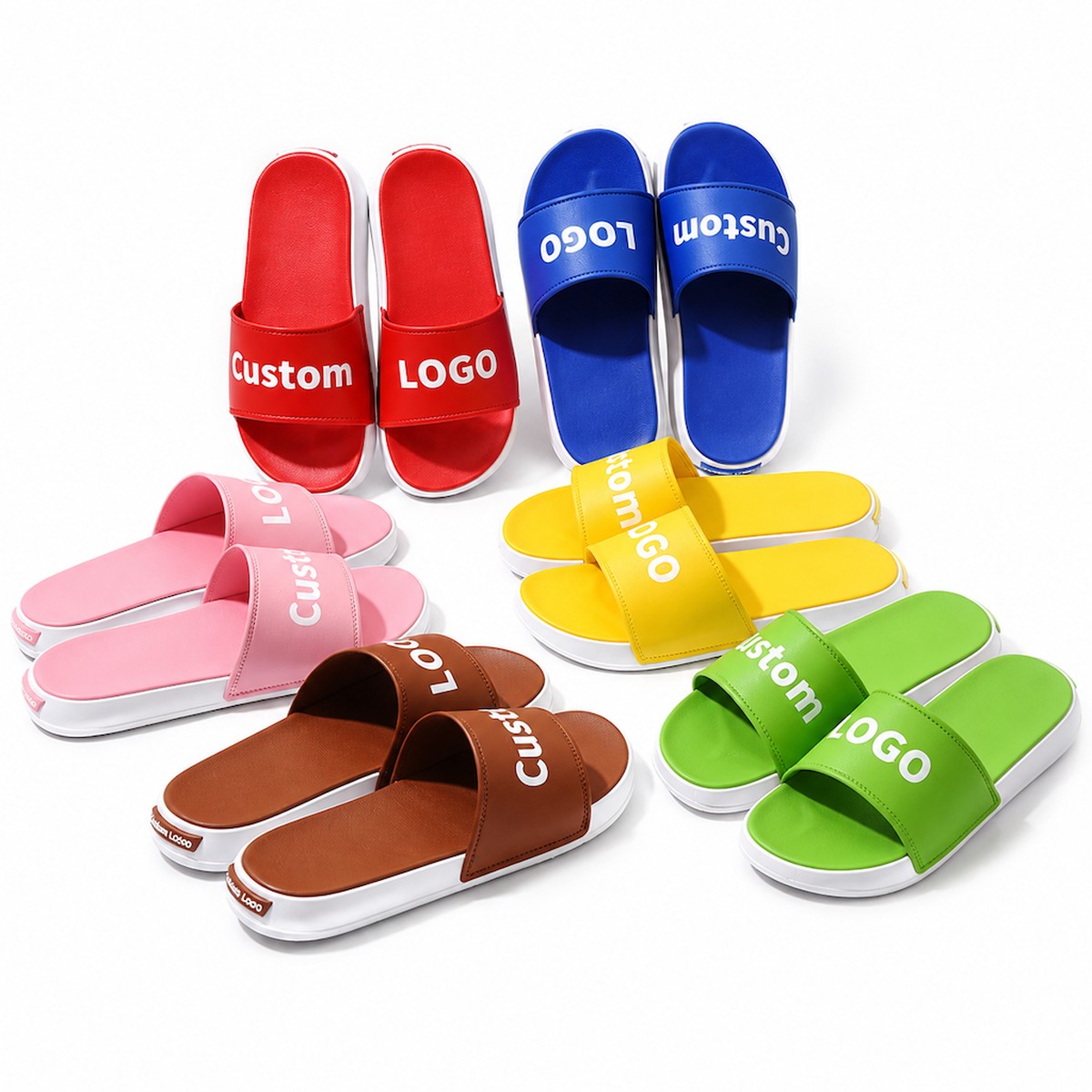
Dual-Tone Athletic Slide (Model 219)
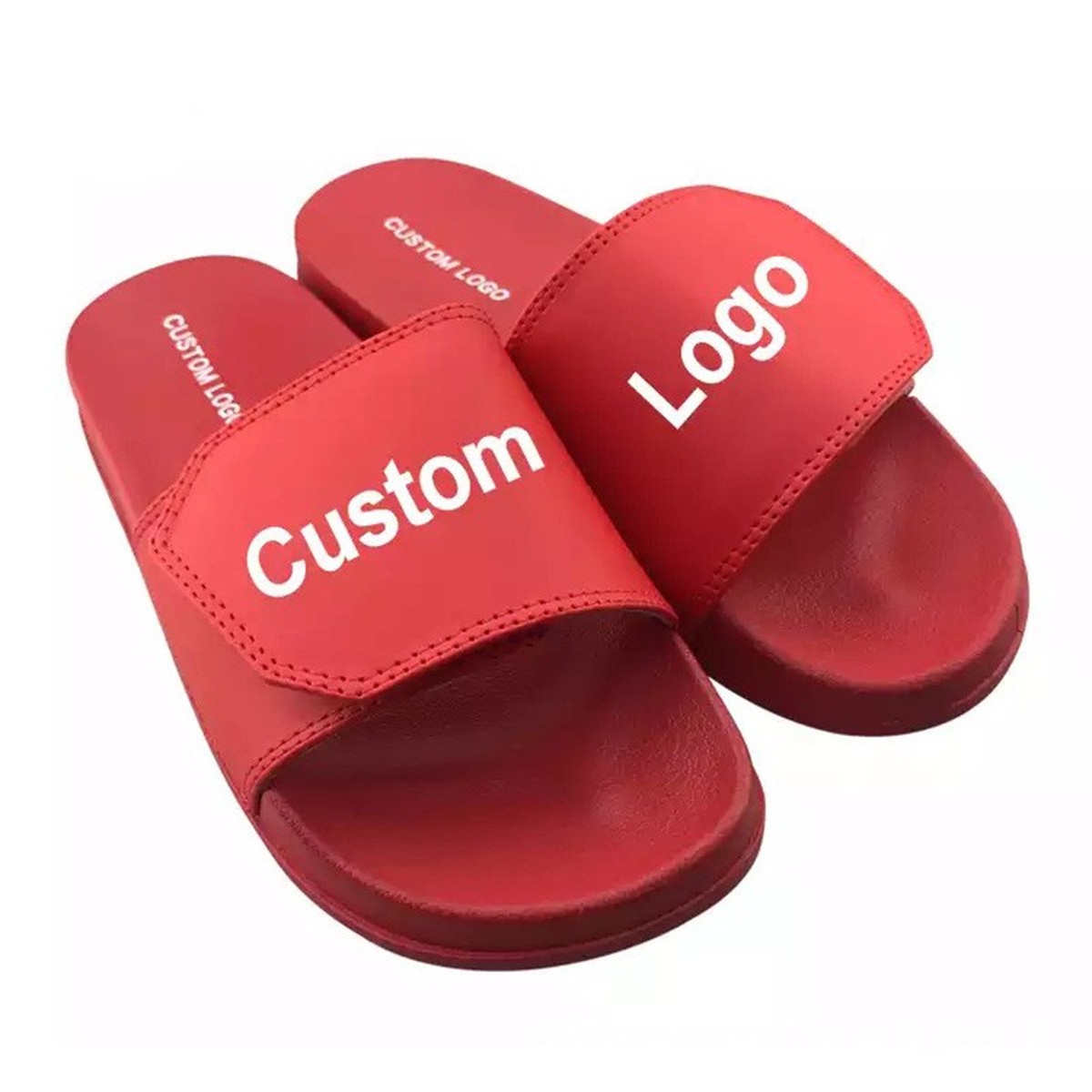
Comfort Band Leisure Slide (Series 5)
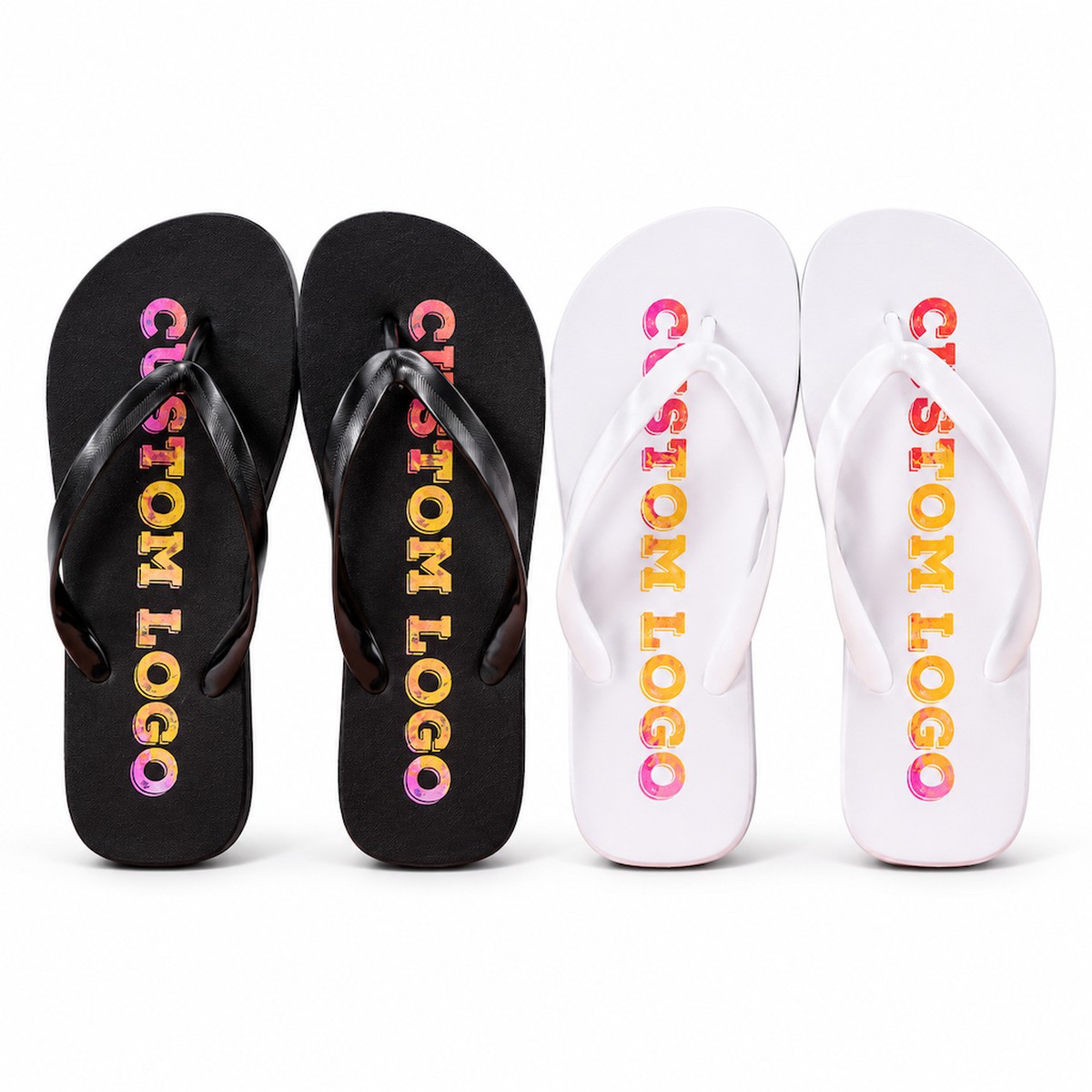
Beach Pro Flip Flop (Series 3)
Classic Club Slide (Series 8)
Engineered Molded Slide (Model 229-R)
Get your 3D proof and bulk quotation
Send your artwork, construction and quantity. Our footwear engineering desk replies with an itemised quotation and a 3D virtual proof within 24 hours. Strict 100-pair MOQ.